Lead Generation for Recruitment Agencies: LinkedIn Outreach and Partner Selection
A staffing-specific guide to choosing a lead generation partner, including LinkedIn outreach, compliance checkpoints, ATS integration, and realistic retainer expectations.
Most lead generation companies build offers around SaaS and generic B2B buyers, leaving recruitment and staffing agencies with solutions that miss the real problem. Staffing agencies need hiring-manager conversations booked fast enough to close requisitions before multiple other agencies move in, with candidate and hiring compliance handled correctly. That's narrower than most ranked lists describe.
Quick version: Pick a partner that separates client leads from candidate sourcing, runs a multi-channel sequence across LinkedIn, email, and phone, hands qualified replies into your ATS or CRM, and can show reply quality on staffing-specific accounts rather than vanity volume.
Why recruitment agencies need a different approach
Speed matters most. A contingent or contract role decays fast: a vacancy that is 45 days old is worth far less than one that is 5 days old, because the client has usually engaged three other agencies by then. Your outreach has to reach hiring managers while the requisition is still warm.
The buyer is also different. In SaaS, the prospect and the end user are often the same person. In staffing, you sell to a hiring manager or HR lead while separately sourcing candidates to fill the role.
Generic lead generation treats your account as one more B2B list. Temp, contingent, and retained search each have different buyer personas and different urgency. A list built for "HR software buyers" will not match the hiring managers who actually sign off on a requisition.
Client leads versus candidate sourcing: what staffing agencies actually buy
These are two separate jobs, and mixing them is the most common planning mistake.
Client lead generation finds and books meetings with hiring managers and decision-makers who have roles to fill. This is outbound sales: ICP definition, verified contact data, sequenced outreach, and qualified replies handed to your business development team.
Candidate sourcing finds people to place into those roles. It draws on job boards, candidate databases, referrals, and recruiter LinkedIn networks, and it runs on a different compliance footing because you are handling individuals' personal data.
Be clear about which one you are buying:
- Need more open requisitions and new client accounts That is a client lead generation problem.
- Winning work but struggling to fill fast That is a candidate sourcing and recruiter-capacity problem.
- Losing roles because you reach hiring managers too late You need faster client outreach feeding the top of the funnel.
Most vendors solve the first job. Paying for client acquisition when your real bottleneck is candidate throughput wastes money.
How to compare providers for a staffing agency
Evaluate partners against staffing-specific criteria. Four models show up most often:
- Managed service: the vendor runs targeting, data, sending, and reply handling for you. Lowest internal lift, best fit when recruiters have no time to run outreach.
- Platform or self-serve: you get software and do the work. Cheaper on paper, but recruiters rarely have hours to spare for deliverability and copy testing.
- Fractional SDR teams: dedicated reps assigned to your account, usually a higher monthly commitment.
- Pay-per-lead: you pay per delivered lead. Watch lead quality closely, since volume incentives can pull in the wrong hiring managers.
Score each option on LinkedIn capability, ATS and CRM handoff, compliance documentation, and whether they can point to recruitment outcomes rather than generic SaaS case studies.
A staffing outcome worth modeling
A tech staffing agency averaging a 45-day fill time could realistically compress that toward 20 days with managed outreach targeting engineering and product hiring leads. The lever is speed and consistency at the top of the funnel, not magic volume.
Cost per lead, cost per placement, and breakeven
Judge spend against placement economics, not cost per lead alone. A single permanent placement at a 20% fee on a mid-level salary can cover several months of a managed retainer.
Work backward in three steps:
- Average placement value: Take your typical fee per placement (permanent fee or contract margin over the assignment).
- Conversations needed per placement: Estimate how many booked hiring-manager meetings turn into a signed role, then into a filled role.
- Breakeven: Divide the monthly retainer by average placement value to see how many placements justify the spend.
For many agencies, one to three placements per quarter covers the cost and clears profit. Breakeven typically arrives in the second or third month, because the first few weeks go to list building and inbox warm-up before meetings land.
LinkedIn outreach for staffing agencies: when and how it works
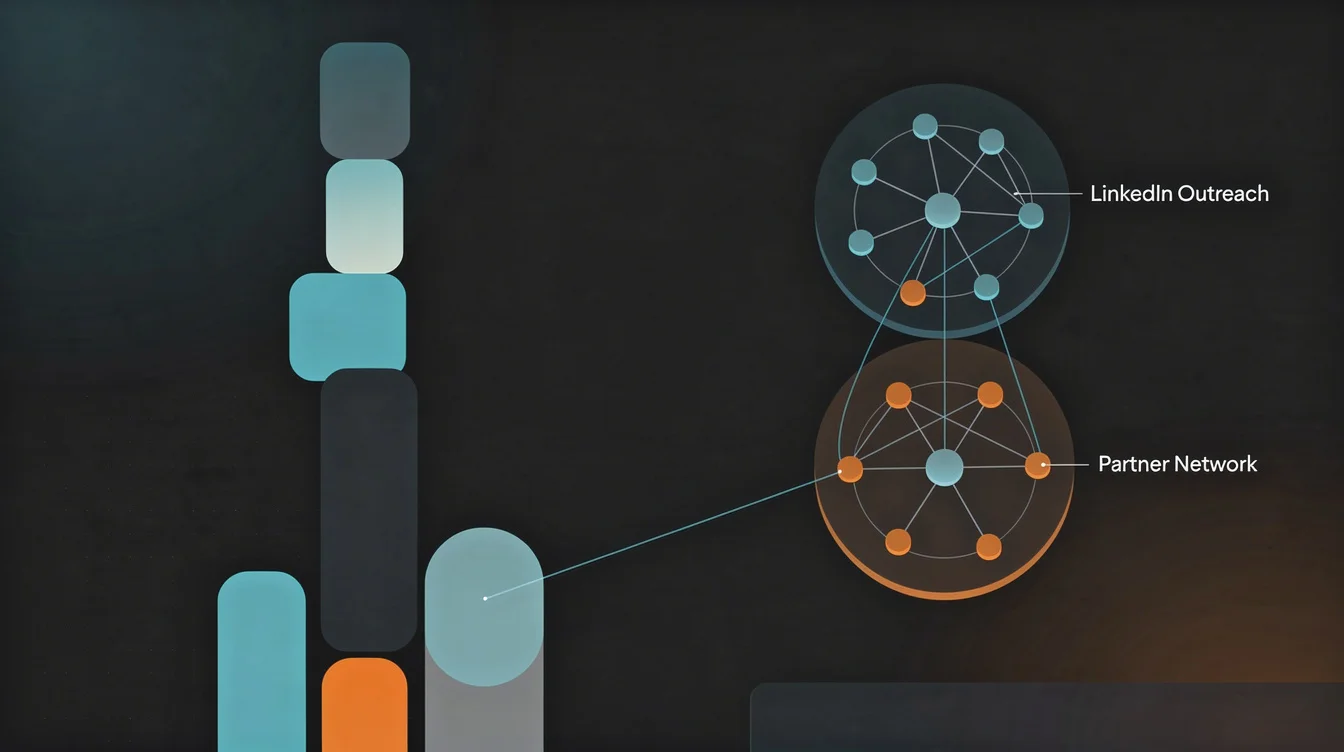
LinkedIn is where hiring managers, heads of talent, and department leads are easiest to identify by role and seniority. It works best as one leg of a multi-touch sequence, not on its own.
A practical cadence pairs a connection request and a light LinkedIn message with a short cold email and, for priority accounts, a phone follow-up. Each channel covers the others' blind spots: email carries detail, LinkedIn adds a face and context, and a call closes the meeting.
Keep two compliance lines clear when you prospect hiring managers:
- Business outreach to hiring managers is commercial B2B contact, governed by the sending rules in each market. Consent and unsubscribe handling vary by country.
- Candidate data is a separate matter. Fair hiring rules, candidate privacy, and background-check regulation such as the Fair Credit Reporting Act (FCRA) in the US apply once you move people into placement processes.
Ask any vendor how they document consent or sending basis per market, and confirm that their work touches hiring-manager outreach only, not candidate screening, unless you have explicitly scoped that in.
If reply quality on LinkedIn matters more to you than raw volume, track replies by whether they came from an actual requisition owner, not just any accepted connection.
Where managed LinkedIn outreach fits
A managed LinkedIn outreach service runs the layer most recruitment teams cannot staff internally: sourcing and enriching hiring-manager data, writing and sequencing messages, managing replies, and handing qualified conversations to your recruiters with the context attached.
This approach pairs well with managed cold email and reply management into your CRM. It is a fit when your bottleneck is client acquisition speed, not candidate throughput.
Evaluation checklist for lead generation partners
- ATS and CRM integration: Can they hand qualified replies into your recruiter workflow, or do leads sit in a spreadsheet
- Managed vs. DIY: Be honest about whether anyone on your team has hours to run campaigns.
- Compliance expertise: Do they document a sending or consent basis per market, and do they keep candidate-side rules (FCRA, fair hiring, privacy) separate
- Pricing clarity: Flat retainer or per-lead, and exactly what the number covers
- Speed to first meeting: Ask when campaigns launch and when meetings typically start. Managed providers often quote two to three weeks to first meetings.
- Reply quality: Ask to see sample replies and how they qualify a hiring-manager response.
- Multi-channel: Confirm LinkedIn, email, and phone work together, not as isolated add-ons.
- Staffing proof: Ask for a recruitment-sector example with placement or fill-time metrics, not a generic SaaS win.
Common mistakes staffing agencies make
The most expensive error is buying a generic B2B lead list. A list aimed at "B2B decision-makers" rarely maps to the hiring managers who own a requisition.
Weak compliance handling is the next trap. Mixing candidate data into client outreach, or ignoring per-market sending rules, creates risk that no reply rate justifies.
Single-channel reliance costs meetings. LinkedIn alone, or email alone, underperforms a coordinated sequence.
Thin follow-up kills otherwise good campaigns. Hiring managers are busy; one touch is not a sequence. If replies are not managed and routed quickly, warm conversations go cold before a recruiter sees them.
Your first 30 days: retainer, expectations, and launch timeline
Expect a ramp, not an instant flood. A managed engagement usually runs on a monthly retainer, commonly starting in the low thousands per month.
A realistic first month looks like this:
- Days 1 to 7: ICP and persona definition for your target hiring managers, list building, and sending infrastructure setup or domain warm-up.
- Days 8 to 14: Copy and sequence drafting across LinkedIn and email, with segmentation by role type and seniority.
- Days 15 to 21: Campaign launch, with first replies and meetings typically starting to land.
- Days 22 to 30: Reply management, optimization, and the first review of which segments produce qualified hiring-manager conversations.
Track three metrics from the start: reply rate, booked hiring-manager meetings, and (over the following weeks) placements traced back to the channel. Reply rate tells you if targeting and copy work; meetings tell you if the replies are real; placements tell you if the spend pays.
For a deeper look at tracing which channels drive your pipeline, see Growleady's guide to understanding where your leads come from.
Frequently asked questions
Should a staffing agency use lead generation for clients or candidates
Lead generation services mean client acquisition: booking meetings with hiring managers who have roles to fill. Candidate sourcing is a separate discipline on a different compliance footing. Decide which bottleneck you are solving before you buy.
Is LinkedIn or cold email better for reaching hiring managers
Neither alone. LinkedIn is strong for identifying requisition owners by role and seniority; email carries detail and scales; phone closes priority meetings. A coordinated sequence across all three outperforms any single channel.
How soon will a lead generation campaign produce meetings
Managed campaigns commonly book first meetings two to three weeks after launch, because the first week or two goes to list building and inbox warm-up. Plan for breakeven around the second or third month.
What compliance questions should I ask a lead generation vendor
Ask how they document a sending or consent basis per market, how they keep candidate data (FCRA, fair hiring, privacy) separate from client outreach, and whether their scope is hiring-manager contact only unless you expand it.
How do I measure whether the spend is worth it
Compare the retainer to average placement value. Track reply rate, booked hiring-manager meetings, and placements traced to the channel. For many agencies, one to three placements per quarter covers a managed retainer and clears profit.